
- -20%
- New
 AROMATHERAPY
 INCENSES
 CANDLES
 JEWELRY AND ORGONITE
 DECORATION
 ESOTERICISM
 MINERALS AND CRYSTALS



















































 NEWS New
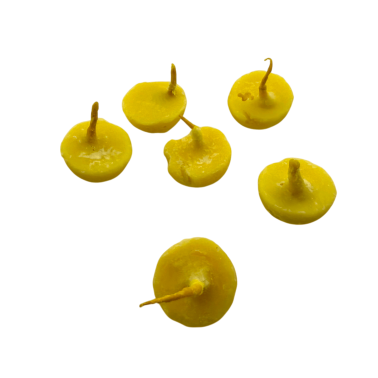
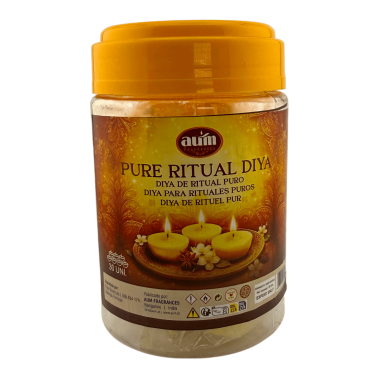
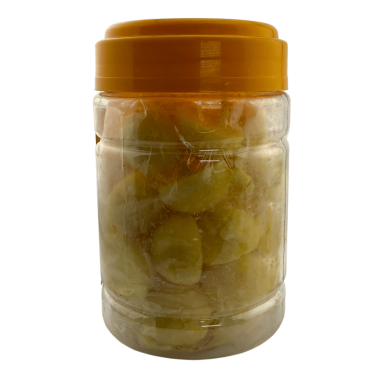
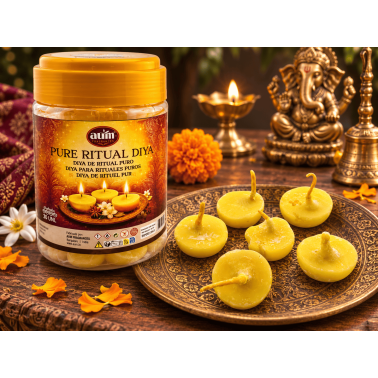
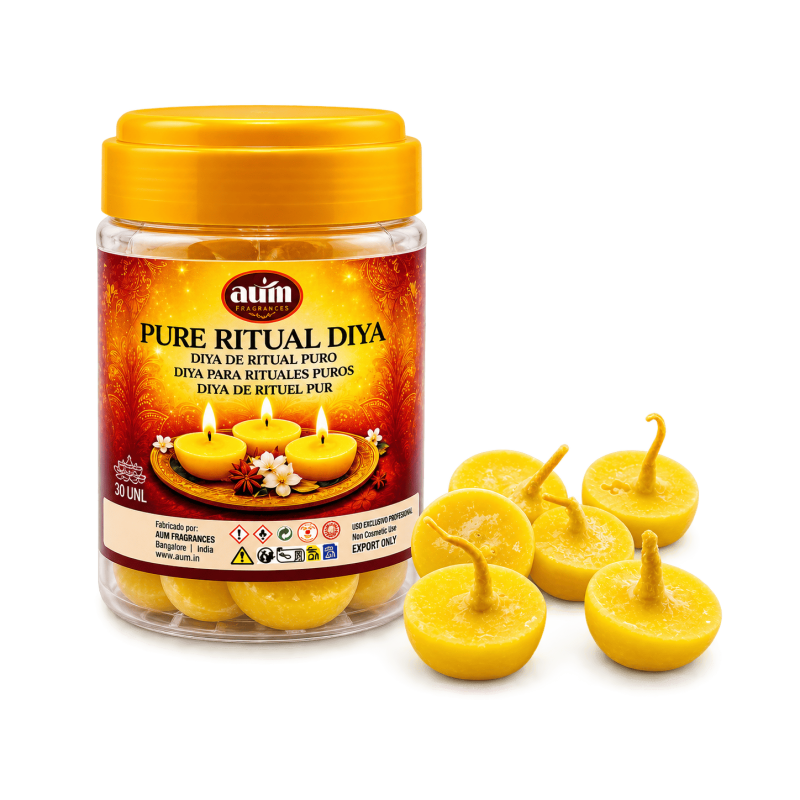
Discover the AUM Ghee Diya Candles – 30 Units , a presentation of ritual lights inspired by the spiritual traditions of India, especially used in Puja, Aarti ceremonies, offerings and Hindu devotion .
Diyas are small ceremonial lamps that symbolically represent light, knowledge, and the victory of clarity over darkness. Lighting them is an important practice in many Hindu homes, temples, and celebrations.
This 30-unit pack of ghee diya candles provides several lights for devotional practices, religious ceremonies, and personal moments of prayer and reflection.
A particularly interesting proposal for those who practice Hinduism, prepare altars dedicated to Hindu deities, or wish to learn about the ceremonial traditions of enlightenment in India.
A diya , also called deepa or deepam in different languages and contexts of India, is a small lamp traditionally used in religious ceremonies and celebrations.
Classic diyas can be made of clay, metal, or other heat-resistant materials and are fueled with oil or ghee via a wick.
Its light has a profound symbolic meaning in Hinduism: it represents knowledge, hope, devotion, and the elimination of ignorance.
Light and knowledge: symbolizes spiritual clarity in the face of ignorance.
Devotion: It is used as a luminous offering in religious ceremonies.
Ritual purity: it is part of traditional practices of preparation and veneration.
Hope: represents the presence of light even in times of difficulty.
Spiritual hospitality: can accompany the preparation of a prayer space.
Celebration: It is present in festivities and ceremonies of various Hindu communities.
Diyas are one of the most recognizable visual elements of Indian spirituality and celebrations.
Ghee is a clarified fat, traditionally obtained from butter, very present in the gastronomic and religious culture of India.
In certain Hindu rituals it is used as fuel for ceremonial lamps and in other offering practices.
Its use has a cultural and devotional significance, especially in ceremonies where the flame represents an offering of light.
Ritual offering: used in certain Hindu ceremonies.
Devotion: associated with the lighting of lamps intended for worship.
Tradition: It is part of religious practices passed down through generations.
Ceremonial light: allows a flame to be maintained in appropriate lamps.
Recollection: accompanies moments of prayer and contemplation.
Ghee diya candles offer a practical way to incorporate this type of lighting into personal ceremonies, always following the manufacturer's instructions for use.
Puja is a practice of veneration and devotion present in various traditions of Hinduism.
It can be performed in temples, homes, or personal prayer spaces and can take different forms depending on the community, the deity venerated, and family customs.
During a Puja, elements such as flowers, incense, water, food, bells, and lit lamps may be used.
Diya lights can be part of the preparation of the altar and the luminous offerings dedicated to a deity.
Among the deities venerated in various Hindu traditions are:
Ganesha: associated with wisdom, beginnings, and overcoming obstacles.
Lakshmi: related to prosperity, fortune, and abundance.
Saraswati: linked to knowledge, the arts, and learning.
Shiva: one of the main deities of Hinduism.
Vishnu: central deity in various traditions of preservation and cosmic order.
Durga: venerated in numerous traditions as a manifestation of divine power.
Lighting a lamp can express respect, devotion, and gratitude within these religious practices.
The Aarti , also spelled Arati , is a devotional act present in numerous Hindu traditions in which light is offered before a deity or sacred representation.
Usually, a lamp or ceremonial container with one or more flames is used, sometimes accompanied by singing, prayers, or bells.
Light symbolically represents devotion and the presence of the sacred.
Ghee diya candles can be used as a light source in ceremonial preparations compatible with their format and the customs of each tradition.
They can be used as ceremonial lights during worship and offering practices.
They are suitable for those who maintain a Hindu prayer space at home and wish to have ritual lights for their ceremonies.
They can accompany devotional practices in which a lit lamp is used, respecting the customs of each tradition and the product's safety instructions.
Diya lamps have a particularly well-known role during Diwali or Deepavali , the festival of lights, although they also appear in other festivities and ceremonies.
Its illumination can accompany personal moments of contemplation and devotion.
The specific procedure depends on the physical format of the candle and the manufacturer's instructions.
As a general guideline:
Prepare the altar: choose a stable, clear, and heat-resistant surface.
Place the diya candle: use a suitable holder for the product and avoid any contact with flammable materials.
Check the wick: make sure it is correctly positioned and ready to be lit.
Turn on the light: use a lighter or a match with caution.
Perform your prayer or offering: follow the practices corresponding to your religious tradition.
Extinguish the flame safely: do not leave the area while it remains lit and check that it is completely extinguished.
Important: Do not place these candles directly on wood, fabric, paper, or other combustible surfaces. If the package includes a container or wrapper, check the manufacturer's instructions to see which parts are safe to leave in place during burning.
Brand: AUM.
Product: diya candles for Hindu rituals.
Type: ritual ghee lights.
Contents: 30 units.
Tradition: Hinduism.
Traditional uses: Puja, Aarti, offerings and devotional ceremonies.
Symbolism: light, knowledge, devotion, and hope.
Application: home altars and religious ceremonies.
Presentation: pack of 30 units.
At Hostenatura , an online store specializing in incense, ritual items and spiritual products, you can find the AUM Ghee Diya Candles – 30 Units , intended for ceremonial lighting practices and Hindu devotion.
Its presentation of thirty units allows for several lights to be available for ceremonies, offerings, and moments of prayer.
They are an option for those looking for diya candles for Puja , ghee lights for Hindu altars, or traditional items for celebrations like Diwali.
Discover at Hostenatura the products for rituals, offerings and spiritual practices of different traditions.
They are ritual lights inspired by traditional Hindu lamps, used in practices of prayer, offering and veneration.
The package contains 30 ghee diya candles .
Diya is the name used for a small traditional lamp, usually fueled with oil or ghee, present in ceremonies and celebrations in India.
Ghee is a clarified fat traditionally obtained from butter. In Hinduism, it is also used in certain religious and ceremonial practices.
They are used as devotional lights and symbolic offerings within Hindu worship practices.
A Puja is a practice of veneration that may include various offerings and devotional acts. An Aarti is a ceremony or offering of light that may be part of a Puja.
Diya lanterns are characteristic of Diwali, the festival of lights. Their specific use depends on the type of celebration and family or religious customs.
Their primary purpose is ritual lighting. They should not be considered scented candles unless the manufacturer expressly states that they contain a fragrance.
You can purchase the Diya Ghee AUM Candles (30 Units) at Hostenatura, an online store specializing in spiritual items, incense, and ritual products.
Discover the AUM Ghee Diya Candles – 30 Units , a presentation of ritual lights inspired by the spiritual traditions of India, especially used in Puja, Aarti ceremonies, offerings and Hindu devotion .
Diyas are small ceremonial lamps that symbolically represent light, knowledge, and the victory of clarity over darkness. Lighting them is an important practice in many Hindu homes, temples, and celebrations.
This 30-unit pack of ghee diya candles provides several lights for devotional practices, religious ceremonies, and personal moments of prayer and reflection.
Contact us!
Contact us on WhatsApp!