
- -15%
- New
 AROMATHERAPY
 INCENSES
 CANDLES
 JEWELRY AND ORGONITE
 DECORATION
 ESOTERICISM
 MINERALS AND CRYSTALS















































 NEWS New
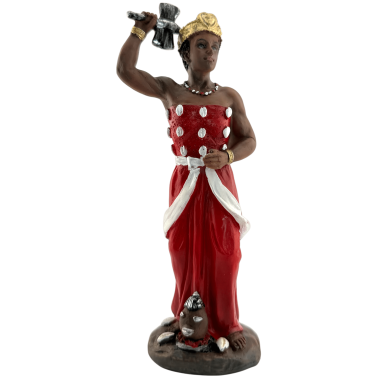
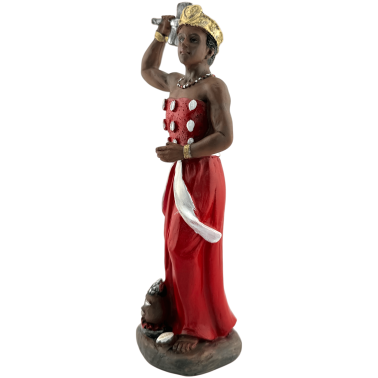
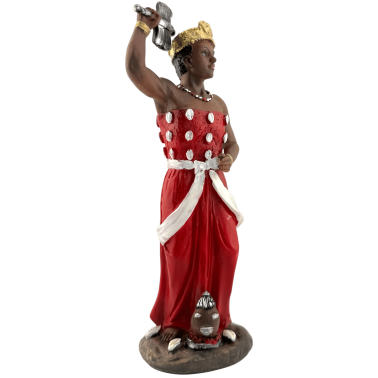
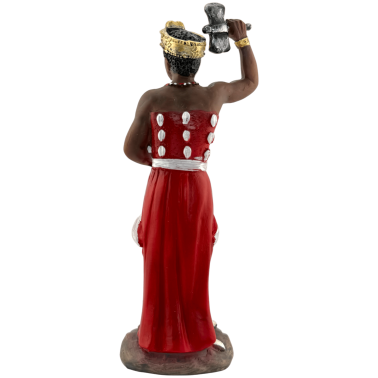
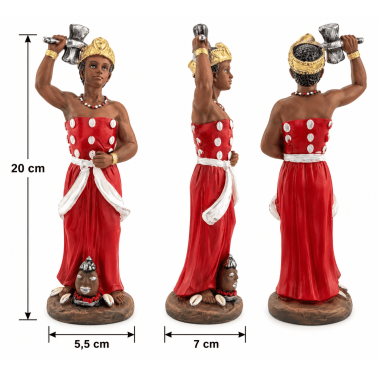
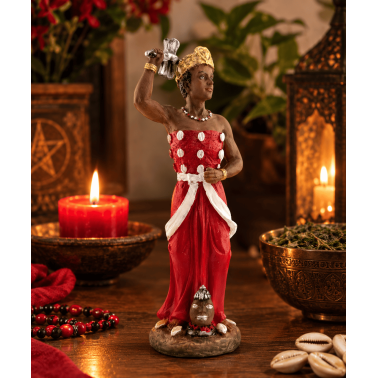
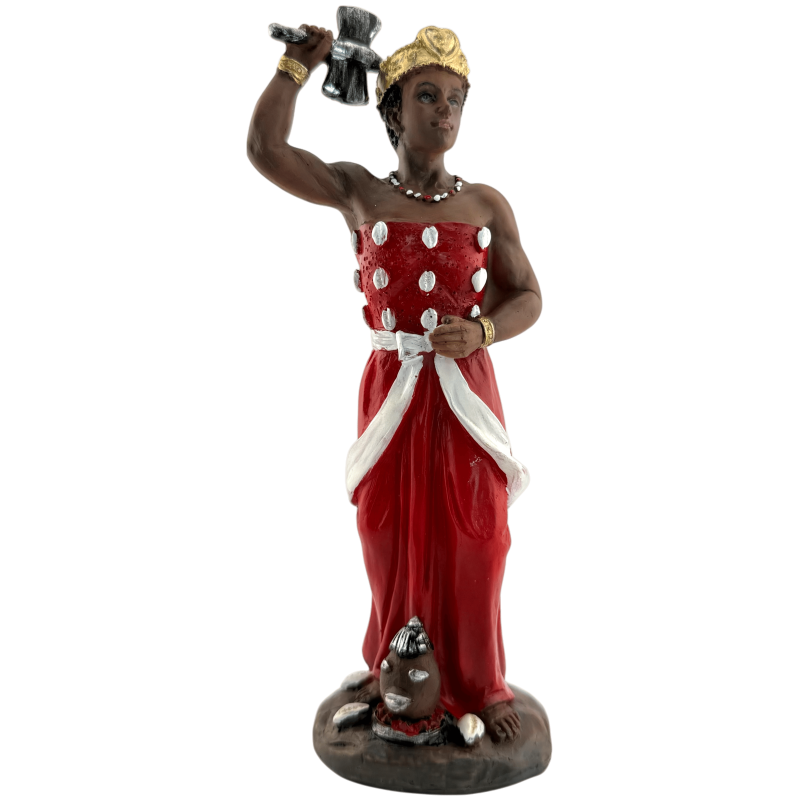
A 20 cm tall figure of the Orisha Changó (Shangó), representing one of the most important deities in the Yoruba tradition and Afro-American religions of Yoruba origin, especially Santería or Regla de Ocha-Ifá. Changó is associated with thunder, lightning, fire, justice, power, leadership, courage, and life force. A figure of great religious and cultural significance, ideal for devotional spaces, altars, and collections of Orisha representations.
The Orisha Changó (Shangó) Figure – 20 cm represents one of the most recognized figures of the Yoruba spiritual universe.
Also known as Shangó, Shango, Ṣàngó, Xangô or Changó , depending on the language and tradition, this orisha occupies a prominent place in different African and Afro-American religious expressions.
Changó is especially known for his association with thunder, lightning, fire, and justice , as well as for his strong character, authority, and warrior energy.
In the traditions that venerate him, he represents qualities such as courage, determination, dignity, leadership, and the ability to face adversity.
His image is deeply linked to the symbolism of the double axe , one of his most characteristic attributes, and to the colors red and white, traditionally associated with this orisha in the Rule of Ocha.
The 20 cm figure is a decorative and devotional representation for those who wish to express their connection with Changó or to learn more about the meaning of this important religious figure.
⚡ Changó · 🔥 Fire · 🌩️ Thunder · ⚖️ Justice · 🪓 Power · ❤️ Courage · 👑 Leadership · 📏 20 cm
Changó is an orisha of the traditional Yoruba religion and of various Afro-American religions that preserve elements of this spiritual heritage.
In Yoruba traditions, Ṣàngó is linked to thunder and lightning, and also to royal authority.
His figure possesses a historical and mythological dimension related to the ancient kingdom of Oyo, in the territory that is currently part of Nigeria.
According to tradition, Shangó was a powerful ruler of Oyo who later acquired a divine status within the Yoruba religious universe.
Accounts of his life and nature vary among religious communities and lineages.
In different traditions, Changó is associated with:
The thunder.
Lightning.
The fire.
Justice.
The authority.
Power.
Courage.
Leadership.
The life force.
The dance and the drums.
Its presence in Yoruba culture and in the African diaspora reflects a rich, complex religious tradition passed down through generations.
One of Changó's best-known associations is his relationship with atmospheric phenomena.
In the Yoruba religious tradition, thunder and lightning are linked to his power.
The roar of thunder can be interpreted symbolically as a manifestation of authority and strength.
Lightning, for its part, represents speed, intensity, and the capacity for transformation.
Within this iconography, Changó is associated with:
🌩️ Power of thunder.
⚡ Lightning energy.
🔥 Fire Force.
💪 Determination.
👑 Authority.
⚖️ Justice.
🪓 Spiritual power.
These associations belong to the realm of religious tradition and do not imply that a decorative figure has control over natural phenomena.
Fire is another of the great symbols associated with Changó.
In numerous religious and cultural interpretations, fire represents energy, transformation, intensity, and strength.
In the case of Changó, it is especially linked to his powerful character and his authority.
The symbolism of fire can be related to:
🔥 Inner strength.
❤️ Passion.
💪 Courage.
⚡ Determination.
🌅 Transformation.
👑 Leadership.
✨ Vitality.
Changó represents an intense force that, within its religious tradition, is also related to responsibility and the exercise of authority.
In addition to his relationship with fire and thunder, Changó is associated with justice.
In different stories and religious practices, he is linked to the power to judge, authority, and the consequences of human actions.
Its symbolism invites reflection on values such as:
⚖️ Justice.
🤝 Honesty.
👑 Responsibility.
💪 Firmness.
🛡️ Dignity.
🌿 Balance.
✨ Integrity.
For those who follow these traditions, the image of Changó can represent the importance of exercising power responsibly and acting with determination.
One of the most recognizable iconographic attributes of Changó is the double-edged axe , known in different Yoruba contexts as oshe Shango or osé Ṣàngó .
This element appears in numerous religious and artistic representations of the orisha.
The double axe is traditionally associated with:
The power of thunder.
The authority.
The force.
Justice.
The energy of Changó.
His identity as an orisha.
It is one of the elements that allow it to be recognized in sculptures, ritual objects, and artistic representations.
The form and details of this attribute may vary according to the tradition and style of each representation.
In Cuban Santería or Regla de Ocha, Changó is especially associated with the colors red and white .
These colors appear in necklaces, beads, fabrics, and various devotional items.
Red is symbolically associated with:
Fire.
Energy.
Intensity.
Courage.
Can.
Vitality.
In symbolic interpretations, white can evoke:
Clarity.
Balance.
Serenity.
Purity.
Harmony.
The combination of both colors is part of Changó's traditional visual identity in certain religious contexts.
The correspondences and their interpretation may vary between communities.
The tradition of Changó maintains an important relationship with the history and cultural memory of the Yoruba people.
The ancient kingdom of Oyo was one of the great historical states of West Africa.
In traditional narratives, Shangó appears linked to royalty and the exercise of power.
His figure brings together elements of history, mythology, and religious devotion.
Therefore, Changó is not only an abstract symbol of fire or thunder, but a figure deeply rooted in Yoruba cultural and spiritual identity.
Music and dance are of great importance in religions of Yoruba origin.
Changó maintains a particularly prominent relationship with drums, rhythm, and certain ceremonial expressions.
In the Rule of Ocha, singing and drumming are part of community religious practices.
Music dedicated to Changó can express strength, energy, respect, and devotion.
In these traditions, dance is not simply a decorative activity: it can be part of religious ceremonies with specific meanings.
For his devotees, Changó can represent a source of inspiration related to strength, courage, and perseverance.
Within the traditions that venerate him, people can address requests to him related to:
💪 Strength in the face of difficulties.
⚖️ Justice.
🛡️ Spiritual protection.
👑 Authority and leadership.
🔥 Determination.
❤️ Courage.
✨ Personal growth.
These requests belong to the realm of faith and traditional religious practices.
The figure does not guarantee material results, physical protection, or supernatural interventions.
The veneration of Changó is present in different religious traditions.
In West Africa, Ṣàngó is part of the universe of the orishas and maintains a fundamental relationship with thunder, lightning, and royal authority.
In Cuba, Changó occupies a central place within the Rule of Ocha.
It is associated with fire, thunder, justice, strength, and certain ceremonial elements.
In Brazil, he is known as Xangô and is one of the most important deities in various Candomblé traditions.
Its veneration preserves elements of Yoruba origin and presents characteristics of the different Brazilian religious lineages.
Devotion to Shangó is also present in other Afro-descendant communities in America and the Caribbean.
Practices, stories, and correspondences can vary considerably depending on the tradition.
In Cuban Santería, Changó is traditionally associated with Santa Bárbara through historical processes of religious syncretism.
This association arose in the context of the African diaspora and the contact between Yoruba traditions and Catholicism.
Saint Barbara is a Christian saint whose iconography and devotion have historically been linked to lightning and thunder.
These associations contributed to the development of religious correspondences in certain Afro-Caribbean contexts.
However, it is important to distinguish between the two traditions: Changó and Santa Bárbara belong to different religious systems , although they may appear linked in syncretic practices.
The 20cm Orisha Changó figure can be incorporated into different personal and religious spaces.
It is suitable as a representation of Changó in:
⚡ Devotional spaces.
🪓 Collections of orisha figures.
🏡 Shelving.
🌩️ Yoruba-inspired decoration.
👑 Corners dedicated to African American culture.
✨ Spaces for spiritual reflection.
In religions of Yoruba origin, the preparation of altars and the placement of consecrated objects may be subject to specific rules.
Therefore, a decorative commercial figure should not be confused with a consecrated religious foundation nor does it replace the guidance of an authorized person within the corresponding tradition.
Changó is a religious figure venerated by living communities that maintain their own teachings, ceremonies, and forms of worship.
Those who wish to approach this tradition should do so with respect for its cultural and religious context.
A Changó figure can represent a personal connection with its symbolism or an expression of interest in the history of the orishas.
However, not all decorative objects have a ceremonial function.
The consecration and specific religious uses depend on the norms of each community.
The 20 cm Changó (Shangó) figure can be a significant detail for people interested in Yoruba and Afro-American traditions.
It is an option for:
🎁 Collectors of Orisha figures.
⚡ People interested in the symbolism of Changó.
🌍 Fans of African-inspired art.
🏡 Spiritual decoration.
🪓 Religious collections.
✨ Themed gifts.
When the recipient belongs to a religious community of Yoruba origin, it is appropriate to respect their preferences and the particular rules of their tradition.
The Yoruba religious universe includes numerous orishas, each with particular stories, attributes, and associations.
| Orisha | Traditional associations |
|---|---|
| Changó (Shangó) | Thunder, lightning, fire, justice, and authority |
| Eleguá (Èṣù/Elegbá, according to tradition) | Paths, crossroads, and communication |
| Ogun | Iron, tools and work |
| Yemayá | Sea and motherhood |
| Oshun | Fresh water, beauty and fertility |
| Obatalá | Creation, wisdom, and clarity |
| Oya | Winds, changes and transformation |
These associations are indicative and may present important differences between religions, regions and lineages.
Product Name: Orisha Changó (Shangó) Figure.
Other names: Shango, Shangó, Ṣàngó, Xangô.
Representation: Orisha Changó.
Height: 20 cm.
Cultural and religious tradition: Yoruba and Afro-American religions of Yoruba origin.
Symbolism: Thunder, lightning, fire, justice, power, authority, and courage.
Product type: Religious and decorative figure.
Use: Spiritual decoration, devotional spaces and collecting.
Contents: 1 figure.
The manufacturing material, weight, and other dimensions of the product are not specified.
Changó is an orisha of the Yoruba tradition associated with thunder, lightning, fire, justice, and authority.
Yes. These are variations in the spelling of the same orisha's name. It can also appear as Shango, Ṣàngó, or Xangô, depending on the language and tradition.
It is traditionally associated with power, justice, fire, courage, leadership, and strength.
One of its most characteristic attributes is the double axe.
In the Cuban Rule of Ocha, it is especially associated with red and white.
Because thunder and lightning are part of its main attributes within the Yoruba religious tradition.
It is called an orisha within the Yoruba religious traditions. The way of explaining its divine nature varies according to the religious system.
In Cuban Santería there is a traditional syncretic association between Changó and Santa Bárbara.
Yes. In different traditions of Brazilian Candomblé it is known as Xangô.
It is 20 cm tall .
It can be used as a decorative or devotional representation. Its specific ceremonial use depends on the norms of each religious tradition.
Not necessarily. A commercial figure should not be considered established unless there is express information that confirms it.
For devotees, Changó holds a religious significance related to strength and justice. The figure itself does not guarantee protection or supernatural outcomes.
Yes. It is a representation of one of the best-known figures in Yoruba religious traditions.
The material is not specified in the available product data.
Place the figure on a firm, stable surface.
Avoid bumps and falls.
Gently wipe away the dust with a dry cloth.
Do not use abrasive products.
Avoid prolonged exposure to excessive humidity.
Keep the figure away from intense sources of heat.
Do not place lit candles too close together.
Handle the decorative elements with care.
The Orisha Changó (Shangó) Figure – 20 cm is a representation of one of the most important deities of the Yoruba and Afro-American religious traditions.
Its meaning brings together some of Changó's most recognizable symbols: thunder, fire, justice, authority, and courage.
Changó is traditionally linked to thunder and lightning.
It represents energy, intensity, and determination.
A figure associated with authority, responsibility, and firmness.
Linked to the double axe is already a rich religious and cultural tradition.
Related to royalty and the historical memory of the ancient kingdom of Oyo.
A suitable format for decoration, devotional spaces, and orisha collections.
If you're looking to buy a 20cm Changó figure, Shangó figure, Orisha Changó statue, Shango image, Xangô figure, Changó god of thunder, Changó santeria figure, Yoruba religious figure, orisha statue, Shangó representation, or African deity figures , discover this item at HOSTENATURA .
⚡ Changó · 🌩️ Thunder · 🔥 Fire · ⚖️ Justice · 🪓 Power · 👑 Authority · ❤️ Courage · 📏 20 cm
Only at HOSTENATURA , the largest incense and esotericism store in Europe.
A 20 cm tall figure of the Orisha Changó (Shangó), representing one of the most important deities in the Yoruba tradition and Afro-American religions of Yoruba origin, especially Santería or Regla de Ocha-Ifá. Changó is associated with thunder, lightning, fire, justice, power, leadership, courage, and life force. A figure of great religious and cultural significance, ideal for devotional spaces, altars, and collections of Orisha representations.
The Orisha Changó (Shangó) Figure – 20 cm represents one of the most recognized figures of the Yoruba spiritual universe.
Also known as Shangó, Shango, Ṣàngó, Xangô or Changó , depending on the language and tradition, this orisha occupies a prominent place in different African and Afro-American religious expressions.
Contact us!
Contact us on WhatsApp!